

How to Trim Dog Fur Naturally for Winter and Holidays
Over 60 percent of American urban dogs face fur matting and discomfort through harsh winters. Keeping your pet’s coat healthy is more than a style choice when temperatures drop and holiday lights brighten city streets. The right grooming techniques not only protect your dog from cold but also make them shine in festive photos and outdoor events. This practical guide shows you how to select the best grooming tools and methods so your dog stays comfortable, stylish, and visible all season.
Table of Contents
- Step 1: Gather Essential Grooming Tools And Supplies
- Step 2: Prepare Your Dog For Safe And Stress-Free Trimming
- Step 3: Identify Target Areas And Select Trimming Techniques
- Step 4: Trim Dog Fur Carefully For Comfort And Style
- Step 5: Check Fur Length And Ensure A Neat, Even Finish
Quick Summary
| Key Point | Explanation |
|---|---|
| 1. Gather essential grooming tools | Assemble high-quality brushes, trimmers, and scissors tailored to your dog’s coat type for effective winter grooming. |
| 2. Create a calm grooming environment | Use quiet spaces, gentle touches, and treats to minimize your dog’s anxiety and promote a positive grooming experience. |
| 3. Identify trimming techniques for areas | Tailor your approach based on the dog’s body zones, using appropriate tools to ensure comfort and precision during trimming. |
| 4. Trim fur with care for comfort | Work slowly in sections with sharp tools to avoid discomfort, ensuring your dog remains comfortable while you groom. |
| 5. Check for an even finish | Regularly assess your dog’s coat for length consistency to achieve a polished look while maintaining natural insulation. |
Step 1: Gather essential grooming tools and supplies
Preparing the right grooming tools is crucial for effectively trimming your dog’s fur naturally during winter and holiday seasons. You will need a strategic collection of professional-grade and pet-friendly supplies that ensure a safe, comfortable grooming experience.
Start by assembling essential dog grooming tools that address different coat needs. Your basic kit should include high-quality brushes suited to your dog’s specific fur type, sharp nail trimmers, pet-safe scissors, detangling combs, and a professional-grade slicker brush for removing loose undercoat hair. Depending on your dog’s breed and coat thickness, you might need specialized tools like de-matting combs or thinning shears for precise trimming.
Select supplies that minimize stress and maximize comfort for your pet. Look for ergonomic tools with comfortable grips and rounded edges to prevent accidental nicks or cuts. Consider having treats nearby to reward your dog and make the grooming process more positive. Always prioritize tools that allow gentle, controlled movements and support your dog’s natural coat health during winter months.
Pro tip: Invest in professional-grade tools with replaceable blades and rounded tips to ensure precision and safety during home grooming sessions.
Here’s a summary of key grooming tools and their major benefits:
| Tool | Main Benefit | Ideal For |
|---|---|---|
| Slicker brush | Removes loose undercoat | Thick, double coats |
| Detangling comb | Works out tangles | Long-haired breeds |
| Nail trimmer | Prevents overgrowth | All dogs |
| Thinning shears | Blends and shapes fur | Curly or dense fur |
| Pet-safe scissors | Safe, precise cutting | Face, paws, sensitive spots |
Step 2: Prepare your dog for safe and stress-free trimming
Preparing your dog for a comfortable grooming experience requires patience, understanding, and a strategic approach to minimize anxiety and create a positive environment. The key is to help your furry friend feel calm and secure throughout the entire trimming process.
Behavior-focused grooming techniques emphasize the importance of gradual introduction and reading your dog’s body language. Begin by letting your dog explore grooming tools without pressure, allowing them to sniff and become familiar with the scissors, brushes, and trimmers. Create short, positive interactions by offering treats and gentle praise during these initial tool introductions. This helps build a positive association and reduces potential stress.
Establish a calm grooming routine by choosing a quiet, comfortable space where your dog feels safe. Use soft, reassuring touches and speak in a gentle tone to help your pet remain relaxed. Pay close attention to signs of discomfort or anxiety, such as trembling, turning away, or showing whale eye. If your dog seems stressed, take breaks and never force the grooming process. Consider breaking the trimming into multiple short sessions to prevent overwhelming your pet.
Pro tip: Practice handling and touching your dog’s paws, ears, and body regularly outside of grooming time to help them become more comfortable with physical manipulation.
Step 3: Identify target areas and select trimming techniques
Understanding how to effectively trim your dog’s fur requires careful assessment of different body areas and selecting appropriate techniques that match your dog’s specific coat type and breed characteristics. Your goal is to create a neat appearance while maintaining your pet’s comfort and natural coat protection.
Professional dog grooming techniques emphasize the importance of identifying specific trimming zones with precision. Focus on key areas that typically require attention including the body, legs, face, paws, and tail. Each region demands a unique approach based on fur density, length, and sensitivity. For instance, areas around the eyes, ears, and sanitary zones require extra caution and gentler handling compared to broader body regions.
When selecting trimming techniques, consider your dog’s individual coat characteristics and winter preparation needs. Longer coated breeds might need more extensive trimming to prevent matting, while shorter haired dogs may require minimal touch ups. Use different tools for different areas shorter scissors for precise facial trims, clippers for body areas, and thinning shears for blending and creating a natural look. Always work in the direction of hair growth and make small incremental cuts to avoid accidentally removing too much fur and compromising your dog’s winter warmth.
Pro tip: Create a calm environment with good lighting and work in short sessions to prevent your dog from becoming stressed or uncomfortable during the trimming process.
This table compares how to approach trimming different dog body areas:
| Area | Recommended Tool | Key Consideration |
|---|---|---|
| Face & ears | Small scissors | Extra caution for eyes and ears |
| Body | Clippers or shears | Maintain natural insulation |
| Legs & paws | Thinning shears | Trim to prevent mats |
| Tail | Thinning or regular shears | Blend for a natural look |
| Sanitary zones | Small scissors | Gentle and hygienic trimming |
Step 4: Trim dog fur carefully for comfort and style
Trimming your dog’s fur requires a delicate balance between maintaining their comfort and achieving a stylish winter look. Your approach will directly impact your dog’s warmth, mobility, and overall well being during the colder months.
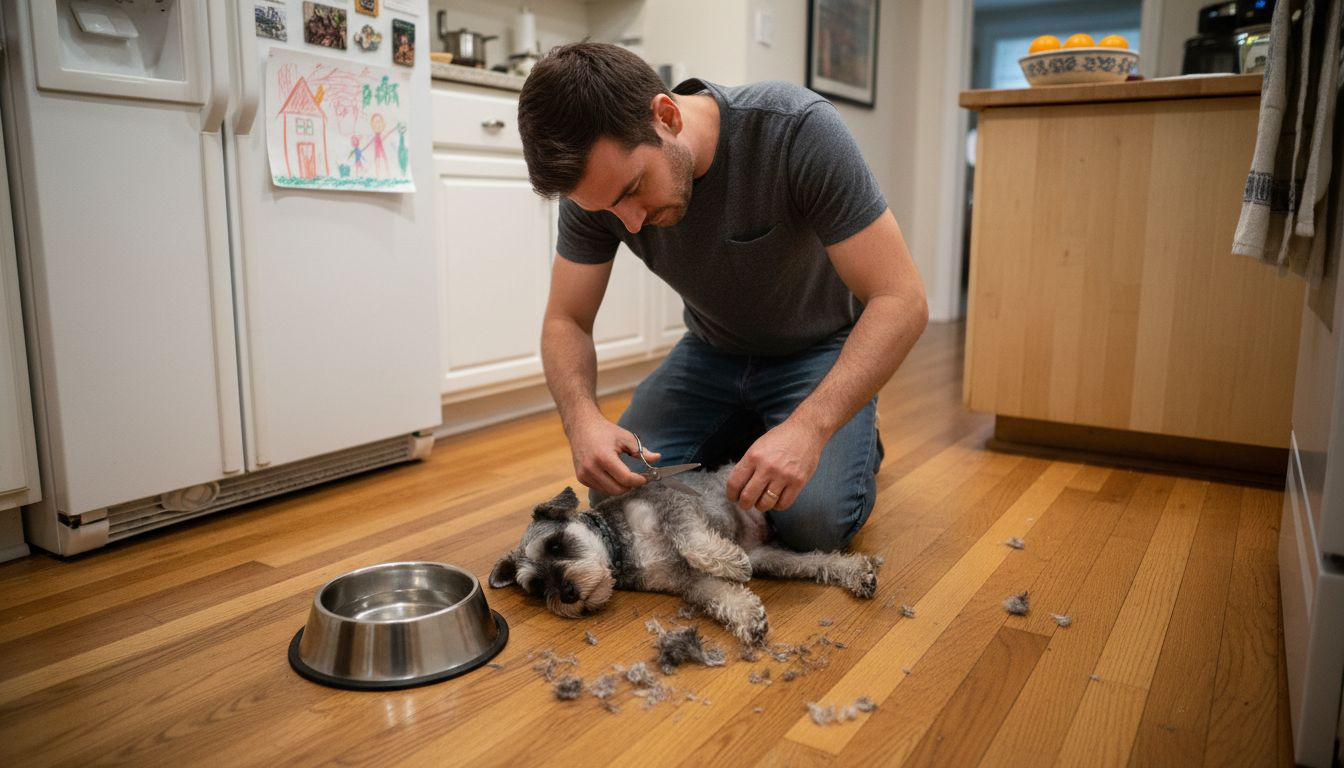
Step-by-step home trimming techniques emphasize systematic and gentle fur management. Begin by working in small sections, using slow and steady movements that keep your dog calm and prevent accidental cuts. Start with larger body areas like the back and sides using long smooth strokes, then gradually move to more sensitive regions such as the legs, belly, and around the face. Always use sharp professional grade scissors or clippers to ensure clean cuts and minimize tugging that could cause discomfort.
Pay special attention to maintaining an even length while preserving your dog’s natural coat texture. For winter preparation, avoid trimming too close to the skin, as the undercoat provides crucial insulation against cold temperatures. Focus on removing matted or tangled sections and trimming longer fur that might impede movement. When working around sensitive areas like the ears, paws, and sanitary zones, use smaller scissors and take extra care to prevent nicks or uneven cuts.
Pro tip: Keep treats nearby and pause frequently to reward your dog and maintain a positive association with grooming sessions.
Step 5: Check fur length and ensure a neat, even finish
Finalizing your dog’s winter trim requires careful attention to detail and a systematic approach to achieving a polished, comfortable result. The goal is to create a uniform look that supports your dog’s comfort and style while maintaining their natural coat protection.
Understanding blade lengths and grooming techniques is crucial for creating a professional looking trim. Start by systematically reviewing each body section using your hands to feel for length consistency. Gently run your fingers through the fur to detect any uneven patches or longer sections that might disrupt the overall appearance. Use a wide toothed comb to help identify areas that need additional trimming, paying special attention to transition zones between different body regions where fur length can naturally vary.
Work methodically across your dog’s body to ensure a balanced finish. Begin with broader areas like the back and sides, then carefully blend into more challenging regions such as legs, chest, and around the face. The key is to create smooth transitions between different fur lengths without leaving obvious lines or patches. For winter preparation, aim to maintain slightly longer fur that provides natural insulation while removing any matted or excessively long sections that might impede movement or collect moisture.
Pro tip: Step back periodically and view your dog from different angles to catch any subtle unevenness that might be missed up close.
Keep Your Dog Cozy and Stylish After Grooming This Winter
Trimming your dog’s fur naturally for winter and holidays is important to protect their comfort and health. You want to avoid cutting too close to the skin while removing tangles and mats that can cause discomfort. After carefully grooming, your next challenge is to keep your furry friend warm, comfortable, and looking great with the right winter gear. FurFamilyClub offers premium winter apparel designed especially for dogs, helping you enhance your pet’s cozy protection against cold weather while celebrating the season in style.

Explore our collection where you can find soft, warm jackets, cozy sweaters, and festive accessories like collars and bow ties that perfectly complement your careful grooming efforts. Act now to prepare your dog for winter with both natural fur care and premium apparel from FurFamilyClub. Visit us today to discover how you can combine professional grooming techniques with fashionable winter essentials to keep your dog comfortable and looking their best throughout the colder months.
Frequently Asked Questions
What tools do I need to trim my dog’s fur naturally for winter?
To trim your dog’s fur, gather professional-grade grooming tools like slicker brushes, nail trimmers, and pet-safe scissors. Invest in ergonomic tools that provide comfort and control, allowing you to trim efficiently and safely.
How can I prepare my dog for a comfortable grooming session?
To prepare your dog, create a calm environment and gradually introduce grooming tools. Use positive reinforcement such as treats and praise, allowing your dog to explore the tools to build a positive association before starting to trim.
What specific areas should I focus on when trimming my dog’s fur?
Focus on key areas like the body, legs, face, paws, and tail, adjusting your technique to each region’s needs. Use appropriate tools for each area, for example, scissors for sensitive spots on the face and clippers for broader body areas.
How can I ensure an even fur length after trimming?
Check for uniformity by running your fingers through your dog’s fur and using a wide-toothed comb to identify any uneven patches. Trim any discrepancies carefully, aiming for a neat finish that maintains your dog’s natural insulation for winter.
What techniques should I use to trim my dog’s fur for a natural look?
Use smooth, steady movements while trimming, and work in small sections. Avoid cutting too close to the skin and focus on removing mats and tangles to maintain your dog’s coat texture and warmth during winter months.
How often should I trim my dog’s fur during the winter season?
Aim to trim your dog’s fur every 4-6 weeks to maintain a healthy coat and prevent matting. Adjust the frequency based on your dog’s coat type and the climate to ensure they remain comfortable and properly insulated.
Recommended
- Winter Warmth for Pets | Best Winter Products for Dogs & Cats – Furfamilyclub
- Dog Christmas Hoodie Dress - Santa Paws Reindeer Style | Furfamilyclub
- Best Dog Grooming Tools and Grooming Tips | Furfamilyclub
- Stylish Dog Shiny Cotton Jacket for Cozy Comfort | Furfamilyclub
- 7 Creative Family Photos at Home Ideas for Pet Owners – The Family Portrait Companys


